Your 2nd Chance – Modular Homes
4415 Harrison, Suite 326 Hillside, IL 60162 Phone: 773-677-6460 Email: libmtg2@gmail.com
Modular Homes
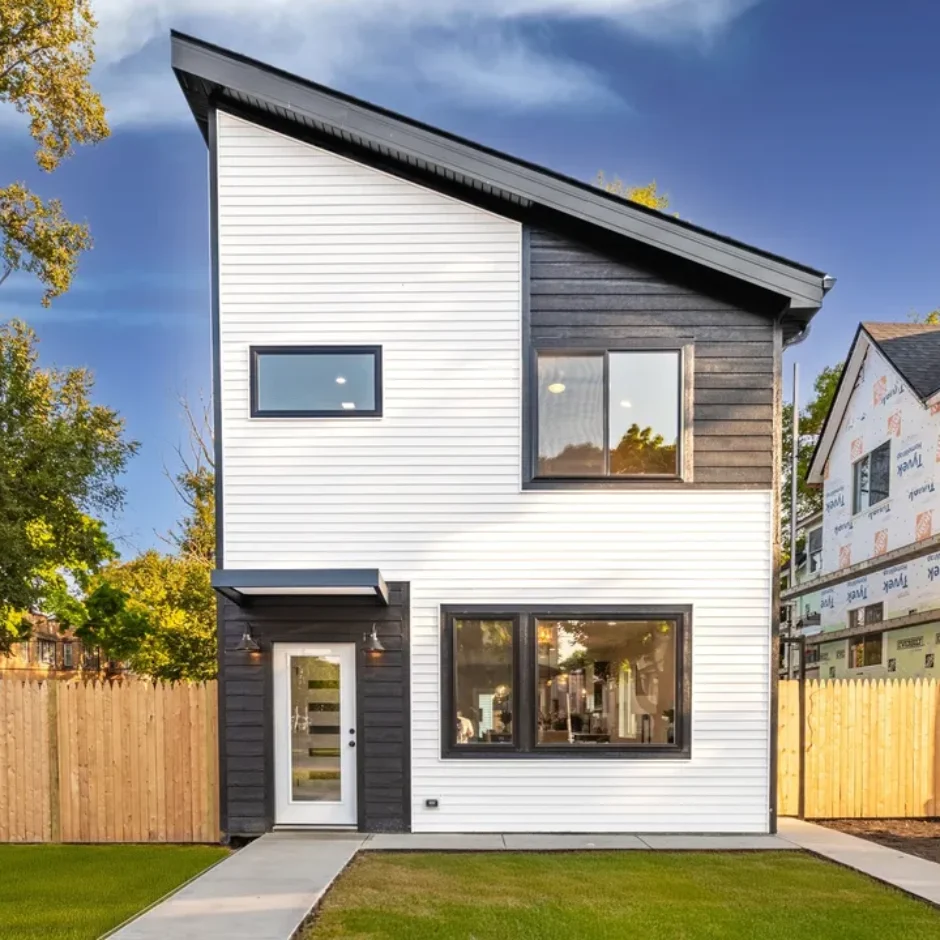
Our Modular Homes are Corten Constructed, Durable Designed and Energy Efficient Engineered.
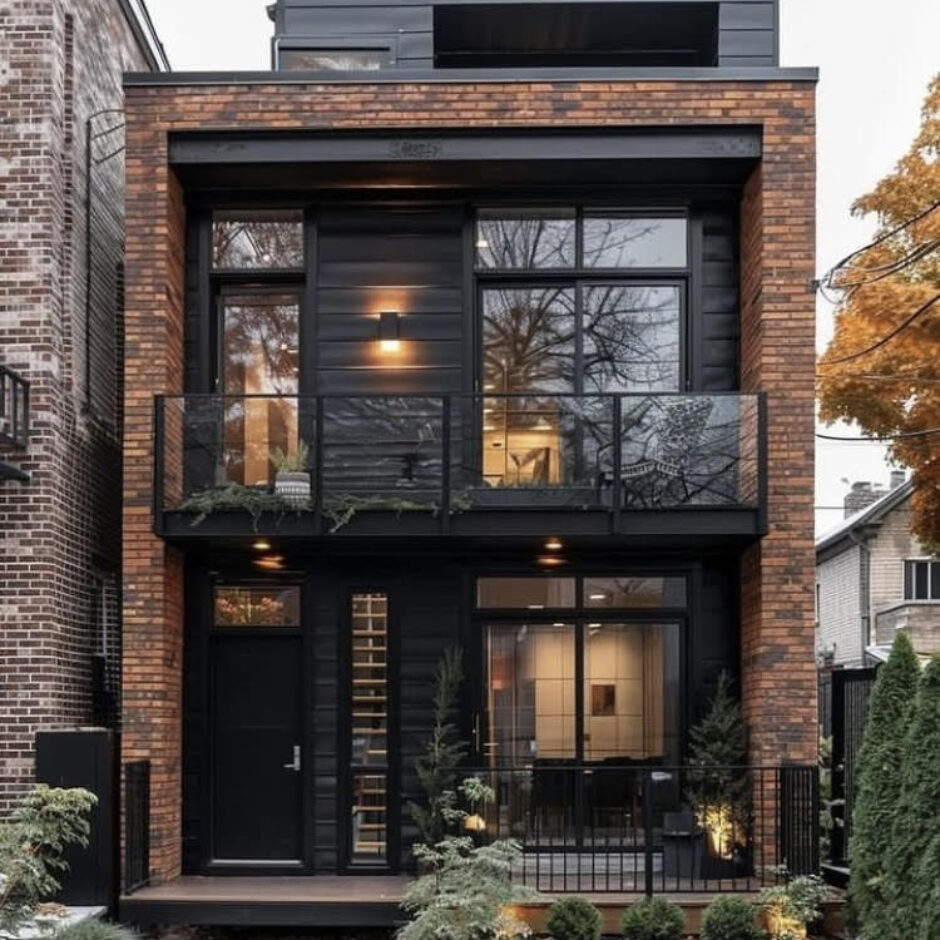
Your Second Chance is a nonprofit corporation committed to
expanding access to affordable, dignified home ownership
opportunities for Chicago residents who are priced out of
the traditional housing market.
.
The organization focuses on innovative housing solutions that
reduce construction costs, shorten development timelines, and
promote neighborhood stability while maintaining high standards
of safety and quality.
.
Statement of Need
Chicago continues to experience a severe shortage of affordable home ownership options in many neighborhoods.
Newly constructed brick homes routinely sell for $400,000 or more, placing ownership out of reach for
working families, first time buyers and residence seeking to remain in their communities.

.
We will create a private Modular Home community of factory built
homes in a community setting. It will offer a vibrant living experience
that will cater to different lifestyles, including families, and retirees.
.
The Modular Home Communities will range from affordable to luxury
homes in cities across the nation. It is estimated that 17.7 million
people live in Modular Homes today.
.
But today more and more, interest in Modular Homes is growing among the American homebuyers.
This is because Modular Homes offer both the flexibility to modify and create custom floor plans, as
well as all the modern amenities, features, and design styles you’d expect in traditional homes.
___________________________________________________________________________________________________________________
The Chicago Grant Program BNAH
The Building Neighborhoods and Affordable Homes Program (BNAH) provides grants to qualifying buyers
to assist in their purchase of primary, owner-occupied residences that are newly constructed single-family
residential buildings, containing no more than four dwelling units, built pursuant to a City of Chicago Land
Sale Redevelopment Agreement or a City Lots for Working Families Agreement. The program provides up
to $100,000 in purchase price assistance to qualifying buyers.
See below Numbers:
Neighborhood Residents Income Limit
Grant Amount
Non-Neighborhood Area Residents Income Limits:
Grant Amount
Below 80% of AMI
$100,000
Below 80% of AMI
$90,000
81 – 90% of AMI
$90,000
81 – 90% of AMI
$80,000
91 – 100% of AMI
$80,000
91 – 100% of AMI
$70,000
101 – 120% of AMI
$70,000
101 – 120% of AMI
$60,000
121 – 140% of AMI
$60,000
121 – 140% of AMI
$50,000
_______________________________________________________________________________________________________________
The following documents are required to be uploaded within the online BNAH application:
1. Required Documentation
2. Original City of Chicago Home Buyer Application (original signed and dated)
3. Mortgage pre-approval / Commitment Letter or 1st lender’s assumption approval letter
4. Copy of Driver’s License or State ID for program applicant(s) – front & back
5. Affidavit of Child Support Compliance (original signed, dated & notarized)
6. Economic of Disclosure Statement (original signed, dated & notarized)
7. Proof of Income
_______________________________________________________________________________________________________________
CHICAGO WEB SITE LINKS
Chicago Web Site
BNAH Checklist
DOH Homebuyer Application
Income Affidavit
Child Support Affidavit
Economic Disclosure Statement and Affidavit
Instructions for the Economic Disclosure Statement and Affidavit
FHA Page
*You get up 6% of the purchase price up to $15,000 in assistance for down payment & closing costs
offered as an interest-free loan, deferred for the life of your mortgage – you don’t need to repay
until you sell your house, refinance, or pay off your mortgage.
Available for all mortgage types, including:
*FHA
*VA
*USDA
*FNMA
*HFA Preferred
*FHLMC HFA Advantage
Homebuyers and their spouses must be first-time homebuyers or exempt.
Exempt means an eligible veteran (evidenced with COE/DD214), or buying a property in a targeted
area Eligibility:
* Household income and purchase price limits apply.
* Minimum credit score of 640 is required.
* Both new construction and existing homes are eligible
Chicago Homegrown Grant Program Information
What is the HomeGrown Purchase Assistance Grant Program?
The HomeGrown Grant is a financial assistance program funded by the City of Chicago Department
of Housing (DOH) to help eligible homebuyers purchase homes in the City of Chicago by providing
financial assistance for:
1. Down Payment
2. Closing Costs
.
Who administers the program?
The program is administered by two (2) Community Development Financial Institutions (CDFIs):
1. Neighborhood Lending Services, Inc. (NLS)
2.TRP Lending LLC (TRP)
These organizations handle applications, eligibility reviews, and grant disbursement.
..
What is the goal of the program?
The program aims to:
1. Help families build equity through homeownership
2. Expand access to affordable housing
3. Support long-term and generational wealth creation Grant Details
.
Is this a purchase price assistance program? If so, how much financial
assistance is available?
Yes. The HomeGrown grant is to provide a subsidy for the purchase of an eligible property
in the City of Chicago.
.
Grant amounts depend on gross household income and property location:
1. Zone A: Up to $70,000
2. Zone B: Up to $50,000
The grant cannot exceed 25% of the home’s purchase price.
.
What are Zone A and Zone B?
1. Zone A: Higher-cost areas with rising home prices
2. Zone B: Lower-income census tracts
.
How do I determine a property’s zone?
To determine a property’s zone, applicants should work with their CDFI administrator (NLS or TRP) to
confirm the eligibility location. You can visit Chicago.gov/HomeGrown – enter the property address into
the Zone Lookup Tool and the tool will identify whether the property is located in Zone A or Zone B. You
can also use the FFIEC Geocoding System to identify the property’s census tract and compare it to the
official list.
.
What can the HomeGrown grant be used for?
1. Down payment assistance
2. Closing cost.
.
What is NOT allowed?
Grant funds cannot be used for:
1. Furnishings or appliances
2. Interest rate buy-downs (temporary or permanent)
3. Appraisal gap coverage
4. Private Mortgage Insurance (PMI)
5. New construction homes tied to City programs → If the home is part of programs like City Lots for Working
Families or new construction homes built pursuant to a City of Chicago Land Sale Redevelopment Agreement
6. Ground-up new construction – develop or construct a newly built home.
.
Eligibility Requirements
Who is eligible?
1. Applicants must meet all of the following criteria:
2. Household Income: Household gross income must be within program limits.
3. Location: Purchase a home located in the City of Chicago.
4. Primary Residence: The home must be used as the applicant’s primary residence.
..
What are the income limit restrictions?
1. Zone A: Up to 120% of Area Median Income (AMI)
2. Zone B: Up to 150% of Area Median Income (AMI)
.
What are the mortgage requirements?
You must:
1. Obtain a fixed-rate mortgage
2. Meet a maximum (back-end) debt-to-income ratio of 38%
.
Mortgage transactions not allowed:
1. Adjustable-rate mortgages (ARMs)
2. Interest-only loans
3. Cash only purchase transactions
.
Does the HomeGrown grant accept co-signers?
No. The program does not allow co-signers. The individual obtaining the mortgage must
apply for the HomeGrown grant and reside in the home as their primary residence for five (5) years.
.
Are there participating lenders that I must work with to obtain the HomeGrown grant?
No, there is no official list of participating or preferred lenders. Buyers should work with a credible lende
of their choice to secure the primary mortgage loan required to purchase the property .
.
Can I apply if I am not a Chicago resident?
Yes, you may apply if you are relocating to Chicago and will occupy the home as your primary residence.
The unit must be your primary residence; non-resident or investment properties are not eligible .
.
Is a down payment required?
Yes. Buyers must contribute at least 1% of the purchase price from personal funds.
.
Can additional down payment assistance programs be layered with the HomeGrown grant?
Yes. The HomeGrown grant can be combined with other down payment assistance programs, as long as the
HomeGrown Recapture Agreement remains in a permitted lien position on the property. In most cases,
the Recapture Agreement must be recorded in second lien position. However, if the transaction includes
both a first and second mortgage, the Recapture Agreement may be recorded in third lien position and still
remain eligible. The Recapture Agreement cannot be recorded in fourth lien position or lower.
.
Please note: BOND-funded programs cannot be layered with the HomeGrown grant. This includes, but is
not limited to, IHDA subsidy programs and the TaxSmart Mortgage Credit Certificate (MCC) Program.
.
Will I have to provide my household income each year?
No. After closing, you will not need to provide income information. However, you will be monitored
for the five (5) year term of the grant to ensure that the home remains your primary residence .
.
Do I need homebuyer education?
Yes. You must complete 6–8 hours of training through a HUD-approved counseling agency (no self-
paced online courses).
.
Additional training may be required for:
1. Condos
2. Condominium Training through a HUD-approved counseling agency
3. Two-unit properties
4. Landlord or Property Management Training through a HUD-approved counseling agency
.
Can I apply if I am a current homeowner?
No. Current homeowners are not eligible for the HomeGrown program, even if you do not live
in your existing property. At time of purchase, you cannot own:
1. Another home
2. Investment property
3. Vacation property
.
Will I be able to refinance in the future?
Yes. Refinancing during the five (5) year term is permitted solely for the purpose of improving
loan terms – such as reducing the interest rate or adjusting the loan structure/terms. Refinances
that provide cash back or take the form of a home equity line of credit (HELOC) are not permitted.
.
All refinances, including any subordination requests, must be submitted to your associated CDFI
administrator (NLS or TRP) for review and approval during the term of the grant.
.
Do you need to be debt-free with the City?
Yes — but with some flexibility.
To move forward, the City of Chicago requires a Scofflaw check, which looks for unpaid city debts like:
1. Parking tickets
2. Red light or speed camera tickets
3. Other municipal fines or fees
.
If you have outstanding debt:
You are not automatically disqualified, but you must fix it before closing:
You have two options:
1. Pay the debt in full, OR
2. Set up a payment plan
What proof you’ll need:
Before you can get a “clear to close,” you must show:
If paid in full:
1. Copy of receipt confirming the balance is paid off
2. If on a payment plan:
3. Copy of receipt showing your first payment
4. A copy of the payment plan agreement
.
Property Eligibility
What types of properties are eligible?
1. Single-family homes
2. Condominiums
3. Townhomes
4. Two-unit properties
Not Eligible Property Types
1. 3- or 4-unit buildings
2. Only smaller properties (single-family homes, condominiums, townhomes and 2-units) qualify.
Larger multi-unit buildings are excluded.
3. Certain new construction homes tied to City programs
4. If the home is part of programs like City Lots for Working Families or has been built pursuant to
a City of Chicago Land Sale Redevelopment Agreement
5. Properties purchased through City of Chicago land sale programs
6. Homes or land acquired via special city-run sales programs are excluded, likely due to existing
affordability or resale rules.
7. Ground-up new construction, You can’t use the program to build a brand-new home from scratch —
it’s limited to existing homes or new construction purchases that are move in ready.
.
Are purchases with rehab properties allowed?
Yes, if:
1. Total rehab costs cannot exceed $50,000
2. Rehab costs cannot exceed 20% of purchase price
.
Application Process
How do I apply?
1. What documents are required? Typical documents include:
2. Application form
3. Household Income verification
4. ID for each applicant
5. Mortgage pre-approval letter
.
How long does it take to process an application?
Typically, 5–10 business days after all required documents are submitted.
.
What happens after I apply?
1. Approved: Receive a Conditional Commitment Letter
2. Denied: Receive a denial letter with explanation
.
What if the program runs out of funds?
1. Applicants may be placed on a waitlist
2. Funding is first-come, first-served
.
Closing & Funding
How long do I have to close?
1. 90 days from approval
2. One 30-day extension may be granted
.
When are grant funds provided?
Funds are wired to the title company and applied at closing.
.
Can I receive cash back at closing?
No. Cash back is not allowed under any circumstances. Any excess funds must be applied toward
the principal balance of the mortgage loan.
Post-Closing Requirements
Do I have to live in the home?
Yes. The home must be your primary residence for 5 years.
Is there ongoing compliance?
Yes. You must submit a Residency Certification Affidavit annually.
Grant Repayment (Recapture)
.
Do I have to repay the grant?
No, repayment is not required as long as you meet all program requirements for a period of five (5) years.
This includes maintaining the home as your primary residence and not leasing or renting the property,
transferring ownership, or taking out a cash-out refinance or home equity line of credit (HELOC).
.
When is repayment required?
Repayment (recapture) is triggered if you:
Sell the home
Transfer ownership
Refinance with cash-out
Move out or lease the unit
.
How is repayment calculated?
The grant is forgiven monthly for over 60 months (5 years).
Each month, 1/60th of the total grant is forgiven.
If repayment is triggered before the 5-year period ends, the remaining balance must be repaid in
full to the City of Chicago.
.
Additional Questions
Can City employees apply?
Yes, City of Chicago employees may apply, if they qualify.
Are there conflict-of-interest rules?
Yes. Applicants must disclose relationships with program administrators using a Homebuyer Affidavit
Disclosure Statement (HADS).
.
Who can I contact for help?
Contact your assigned CDFI that you are working with or intend to work with. Please note, homebuyers
are only permitted to work with one (1) agency, not both. Neighborhood Lending Services, Inc.
TRP Lending LLC.
Cook County Grant Programs

The Cook County Modular Homes Program is a pilot effort leading construction of single-family homes
in three underinvested communities with limited new home construction:
-
Humboldt Park (Chicago)
-
Chicago Heights
-
Proviso Township
Eligibility
Those earning up to 120 percent of the county’s median income are eligible, and in
Disproportionately Impacted Areas and Qualified Census Tracts, there is no income limit.
,
The Program:
County Financial Help:
Property for Sale:
ADD_CONTENT_HERE
-
-
HOME BUYER
Are you looking to purchase a home for yourself and your family?
Click here to learn more about our Homebuyer Program and find
the home of your dreams today!

RESIDENTIAL DEVELOPER
If you are looking to find a home to purchase and rehab or if you are
looking to build a home, click here to see how to become one of our
community developers!
COMMERCIAL/INDUSTRIALIf you are a prospective business owner or looking to expand your
current business, please click here to view our current inventory of
commercial, industrial, and vacant lots!
.
Cook County Land Bank
Step 1. Go to class and get certified for the Grant Programs
NACA is a non-profit HUD Certified homeownership and advocacy organization that has been in the
forefront in the fight for economic justice. NACA has made the dream of homeownership a reality
for hundreds of thousands of working people enabling those with credit issues, limited assets or subject
to discrimination to purchase a home or modify their predatory loan on the most affordable terms.
NACA continues to set the national standard in its advocacy for affordable homeownership and
access to credit.
* NACA Offices
* HUD Counseling Centers in Chicago – To Qualify For Housing Grants
For immediate assistance, Chicago residents can call 311 to connect with a local counselor,
or call the HOPE Hotline at 1-888-995-HOPE (4673).
.
For More Information Call:
Michael Shapiro @ 773-677-6460
Email: libmtg2@gmail.com
.
___________________________________________________________________________________________________________________